



What Are Bunions?
A bunion, medically known as hallux valgus, is a bony bump that forms at the base of the big toe. This deformity occurs when the big toe pushes against the neighbouring toe, causing the joint at the base of the big toe to protrude. Bunions can be painful and often lead to discomfort during daily activities.
Common Causes of Bunion Pain
Understanding the causes of bunions is essential to managing and preventing their progression. Here are some of the most common factors:
Genetics and Foot Structure
Bunions often run in families, as inherited foot shapes can predispose individuals to develop them. Flat feet, high arches, or overly flexible joints may increase the risk.
Footwear Choices
Tight, narrow, or high-heeled shoes can aggravate bunions. These types of footwear put pressure on the toes, forcing them into unnatural positions and exacerbating the condition over time.

Lifestyle Factors
Activities that put repetitive stress on the feet, such as prolonged standing or walking, can contribute to the development and worsening of bunions.
Signs and Symptoms of Bunions
Bunions can manifest in a variety of ways. Common symptoms include:
- A visible bump on the outside of the big toe joint.
- Pain or tenderness in the affected area, especially during movement.
- Swelling and redness around the joint.
- Difficulty finding comfortable footwear due to the deformity.
- Restricted movement in the big toe.
Diagnosing Bunions: What to Expect
When you visit OrthoSports, Dr. Tan Ken Jin will perform a comprehensive evaluation to diagnose your bunion. This typically includes:
- A physical examination to assess the foot’s structure.
- Review your medical and family history.
- X-rays to determine the severity of the bunion and identify any associated deformities or complications.
Non-Surgical Treatment Options for Bunions
Non-surgical methods are often the first line of treatment for bunion pain. These approaches aim to alleviate discomfort and prevent further progression.
Orthotics and Padding
Custom orthotics and padding can redistribute pressure on the foot, reducing pain and preventing irritation. They also provide additional support for proper alignment.
Anti-Inflammatory Medications
Over-the-counter or prescription anti-inflammatory drugs can help manage pain and swelling associated with bunions.
Physical Therapy
Specific exercises and stretches can improve foot strength and flexibility, alleviating discomfort and enhancing mobility. Physical therapy may also address any underlying muscle imbalances contributing to the condition.
When to Consider Surgery for Bunions
If non-surgical treatments fail to provide relief or if the bunion significantly affects your quality of life, surgery might be recommended.
Types of Bunion Surgery
Osteotomy:
Involves cutting and realigning the bone to correct the deformity.Exostectomy:
Removes the bony bump without addressing alignment issues.Arthrodesis:
Fuses the joint to correct severe deformities or arthritis.
Dr Tan Ken Jin will guide you through the surgical options and recommend the most suitable procedure based on your condition.
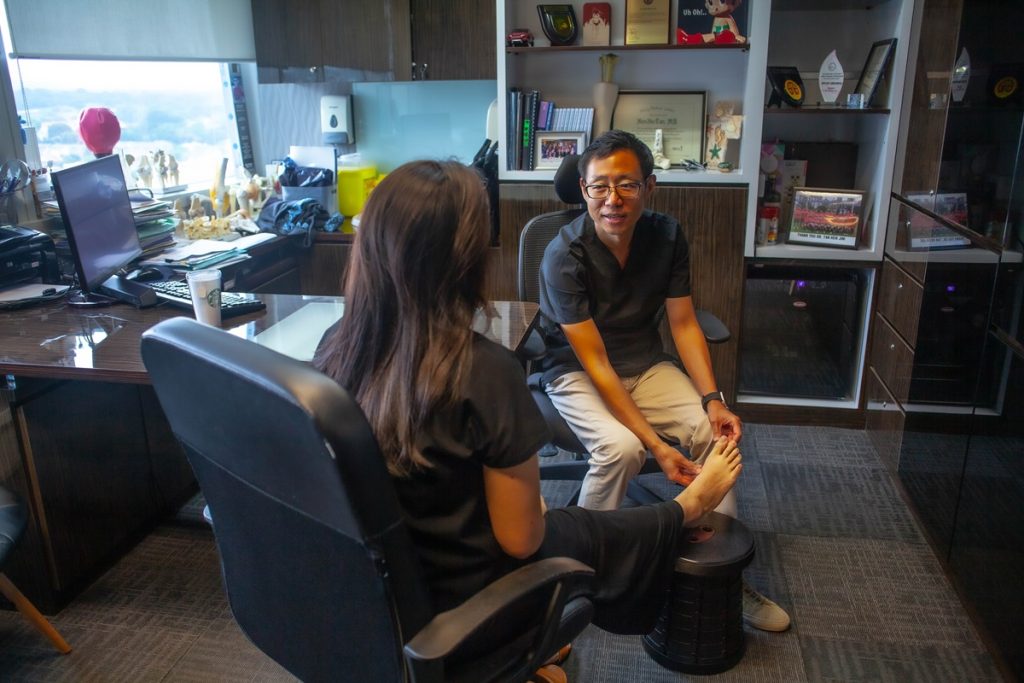
Dr Tan Ken Jin offers advanced surgical treatment options for bunions, focusing on providing patients with the most reliable and accurate correction. His innovative approach includes the following:
Guidance Jig System:
Dr Tan Ken Jin utilizes a technique that uses a guidance jig system for bunion surgery. This approach allows for more precise and accurate alignment during the procedure, ensuring optimal patient outcomes.Minimally Invasive Bunion Surgery (MIS):
Dr Tan Ken Jin also specializes in minimally invasive bunion surgery techniques, which involve smaller incisions, reduced scarring, and a quicker recovery period compared to traditional bunion surgery. These advanced methods allow patients to achieve better results with less downtime and discomfort.
Recovery After Surgery
Post-surgery recovery typically involves:
- Wearing a protective boot or cast to support the foot.
- Following a rehabilitation program to restore strength and mobility.
- Gradual resumption of normal activities under medical supervision.
Tips for Preventing Bunion Pain
Taking proactive measures can help minimize the risk of developing or worsening bunions.
Foot Care Best Practices
- Choose footwear with a wide toe box and adequate arch support.
- Avoid high heels or shoes with pointed toes.
- Use protective padding to reduce pressure on sensitive areas.
Exercises for Foot Health
- Toe stretches: Gently stretch your toes to improve flexibility.
- Towel curls: Use your toes to grip and curl a towel on the floor.
- Foot rolls: Roll your foot over a small ball to massage and relax the muscles.
For more information or to schedule a consultation, visit OrthoSports or contact Dr Tan Ken Jin to explore the best treatment options for bunion pain.