



Trigger Finger
Tips For General Practitioners – Trigger Finger
Trigger Finger
Trigger finger commonly affects patients between 40 to 60 years of age with a predilection for women. It is more common in patients with Rheumatoid arthritis, Diabetes and repetitive strain injuries. Any finger can be affected.
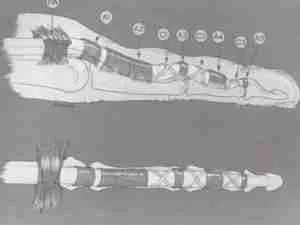
Symptoms develop when a tendon cannot glide in its sheath because of thickening of the A1 pulley over the Metacarpo-phalangeal joint. (Figure 1)
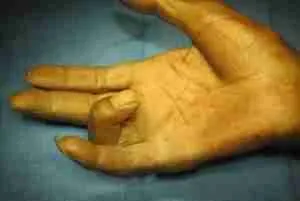
The onset is insidious and usually starts with pain and sometimes a palpable nodule or small lump in the palm. As symptoms progress, the patient may complain of “triggering” or “catching” of the finger with flexion and extension. (Figure 2)
Treatment for early symptoms includes rest, analgesia and splinting. Steroid injections are useful for cases that do not respond to conservative treatment.
Surgical release is recommended for recalcitrant cases.
Technique
Equipment
- Use a 5 mL syringe and a 23-Gauge needle. A 25-Gauge needle is also acceptable.
- Lignocaine can be used safely in dosages of less than 2 mg/kg bodyweight. Generally, 50 mg (5 mL of a one percent preparation) provides adequate analgesia within safe limits.
- Triamcinolone or other steroid preparations are equally acceptable.
- 1 ml each of steroid and Lignocaine is usually adequate for most cases.
- Aseptic techniques should be strictly adhered to.
Location
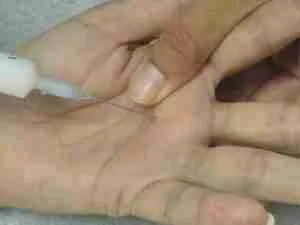
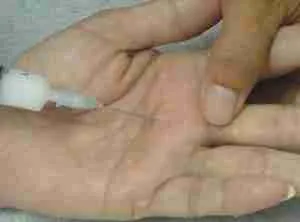
The landmarks for trigger finger injections are the palmar crease and the MCP joint which helps localize the location of the A1 pulley.
1. Start off by identifying the palmar crease and the MCP joint by flexing and extending the finger concerned. (Figure 3).
2. Identify the A1 pulley. This is usually the site of maximal tenderness. (Figure 4).
3. Stabilise the palm and angle the needle approximately 30 degrees as you insert the needle through the skin to the A1 pulley (Figure 5)
4. By aligning your syringe and needle with the corresponding finger you should be able to enter and infiltrate the “nodule” easily. There should be no resistance to flow and the patient should be comfortable throughout the procedure (Figure 6).
Post Op Advice For Patients
- Effects of the lignocaine usually wear off in a few hours. However, the steroid should slowly take effect over the next few weeks.
- Avoid strenuous activity for the following 24 hours.
- If symptoms worsen within the next 2 days, seek medical attention at the clinic. This may be due to a “steroid flare”, which can be managed with cold compresses, NSAIDs and adequate rest.
Contraindications
- Skin abrasions or infections.
- Known allergy to local anaesthetics.